
The Silent Failure in Cybersecurity
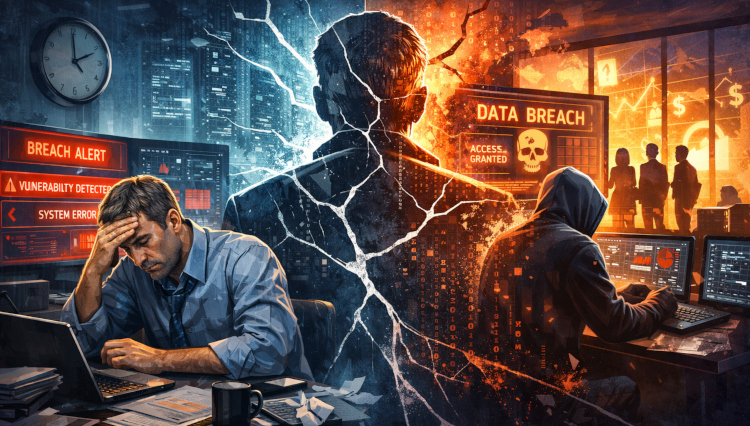
In the age of zero-day exploits and billion-dollar breaches, enterprises are spending more than ever on cybersecurity. Yet a growing number of security incidents have a disturbingly human origin; overworked, overwhelmed Chief Information Security Officers (CISOs) making critical mistakes. In other words, the CISO burnout becomes cybersecurity risk. What happens when the most important person in your security stack is about to walk away?
The Day the Alerts Stopped
At 2:43 AM on a Tuesday in late November 2024, a Fortune 500 company’s Security Operations Center noticed a pattern: external scanning on a legacy system that should have been decommissioned months ago. The vulnerability was well-known and easily patchable. But for some reason, it hadn’t been.
The Chief Information Security Officer, who had been working 70-hour weeks for months, never escalated it. By the time anyone acted, attackers had exfiltrated over 10 terabytes of sensitive data, including IP, customer records, and confidential board materials.
In the aftermath, investigators didn’t just find a technical failure. They found a human one.
The Chief Information Security Officer, respected, experienced, and widely admired, had been suffering from clinical burnout. Their judgment was clouded. Communication with the team had grown sporadic. Key decisions were delayed or avoided altogether. When they resigned a week after the breach, their letter wasn’t angry or emotional. It was just tired. They weren’t alone.
A Profession on the Edge
The role of the Chief Information Security Officer (CISO) has evolved dramatically over the past decade. Once a tactical, back-office position, the Chief Information Security Officer today sits at the strategic core of digital operations. They’re responsible not only for defending against nation-state adversaries, ransomware gangs, and insider threats, but also for translating complex risks to business leaders, navigating compliance landscapes, and managing multi-million-dollar budgets.
And they are breaking. Recent industry research reveals an unsettling trend:
- 94% of CISOs report being stressed at work
- 83% acknowledge making security errors due to burnout
- 1 in 4 plans to leave their post within six months
These aren’t just human resource statistics. They’re red flags. They signal a systemic failure in how organizations staff, support, and sustain one of the most critical roles in the modern enterprise.
The Human Root of Technical Failures
Cybersecurity is often framed in binary terms; breached or secure, patched or unpatched, compliant or non-compliant. But this language overlooks a crucial variable. This variable is the people implementing those controls under enormous stress.
Take the now-infamous 2017 Equifax breach. At first glance, it appeared to be the result of a missed Apache Struts vulnerability. Technically, that was true. But behind the scenes, the failure came down to an overburdened employee missing a patch in a chaotic, high-pressure environment. The resulting breach exposed the data of 147 million Americans and ultimately cost the company over $1.4 billion.
What the post-mortem didn’t mention? The ripple effect inside the security team; confusion, fatigue, and a culture that normalized overextension. Burnout isn’t just a Human Resources (HR) concern. It’s an attack vector.
The Chief Information Security Officer (CISO) Paradox
We romanticize the Chief Information Security Officer (CISO) as a kind of modern-day sentinel: always alert, unflinching in crisis, ready to protect against threats at any hour. The narrative is compelling. It’s also dangerous.
Because Chief Information Security Officers aren’t machines. They’re leaders. They are decision-makers. And like all humans, they have limits.
Security leaders are now expected to:
- Manage sprawling, multi-cloud threat landscapes
- Oversee compliance across dozens of jurisdictions
- Communicate effectively with both engineers and board directors
- Guide digital transformation while defending legacy systems
- Lead 24/7 incident response teams under shrinking budgets
Yet in many organizations, the support for the Chief Information Security Officer – budgetary, operational, emotional – is minimal. Instead, they’re expected to “just handle it.” Until they can’t. And then, CISO burnout becomes cybersecurity risk.
The Hidden CISO Turnover
Chief Information Security Officer departures aren’t always dramatic. Often, they’re quiet exits after months of disengagement, unheeded warnings, and growing apathy from leadership. But the damage they leave behind can be profound.
- Gaps in institutional knowledge
- Interrupted security initiatives
- Delays in incident response preparedness
- Erosion of trust between security teams and executives
Moreover, replacing a Chief Information Security Officer is not a quick fix. The average tenure is now under 26 months. Recruiting and onboarding a replacement can take six to nine months, during which the organization often runs in a vulnerable, reactive state.
Toward a Culture of Security Sustainability
One pattern stands out when it comes to cybersecurity. Organizations that invest in Chief Information Security Officer wellness and team sustainability experience fewer breaches, stronger team performance, and greater executive alignment.
They do this by:
- Limiting “always-on” expectations
- Funding mental health and leadership coaching programs
- Designing roles with succession and delegation in mind
- Prioritizing sustainable response models over hero culture
- Encouraging transparency about workload and stress
The goal is not just to avoid failure. It’s to build resilience into the very fabric of security leadership.
Executive Wake-Up Call
For executives reading this, pause and consider:
- Do you know how many hours your Chief Information Security Officer worked last week?
- Have they taken a full vacation in the last year without being called back mid-crisis?
- Can they say “no” to unrealistic expectations without fearing backlash?
- Do they have the support, tools, and autonomy to lead effectively?
Because if the answer is “no,” then the next breach may already be in motion. Not from a new vulnerability. But from a human system already failing silently.
Conclusion: Redefining Resilience
Cybersecurity isn’t just a technical function. It’s a human one. It’s built on trust, clarity, and sustainable leadership. When those foundations crack, no tool or policy will hold the line.
In an era where digital threats are constant and escalating, the strongest defense isn’t just better technology. It’s stronger, healthier leaders. The Chief Information Security Officer doesn’t need to be a superhero. They need to be heard. Supported. Empowered. Because CISO burnout becomes cybersecurity risk, and when they quit, your risk profile changes overnight. And so does your future.


