The Original MacBook Turns 20
Introduction: Time Flies
Today marks the original MacBook 20th anniversary. Twenty years ago, Apple introduced the original MacBook, a 13-inch consumer notebook that replaced both the iBook and the 12-inch PowerBook. It was more than a product refresh. It was a turning point for Apple’s laptop strategy, its processor architecture, and the identity of the modern Mac notebook. It was the little white laptop that redefined Apple’s portable future.
A New Name for a New Era
The MacBook arrived during one of the most important transitions in Apple’s history: the move from PowerPC processors to Intel chips. Apple had already introduced the MacBook Pro earlier in 2006, but the MacBook brought Intel performance to the company’s mainstream consumer laptop line.
By retiring the iBook name, Apple simplified its notebook family. The message was clear: MacBook for most users, MacBook Pro for professionals.
The Design: White, Black, and Instantly Recognizable
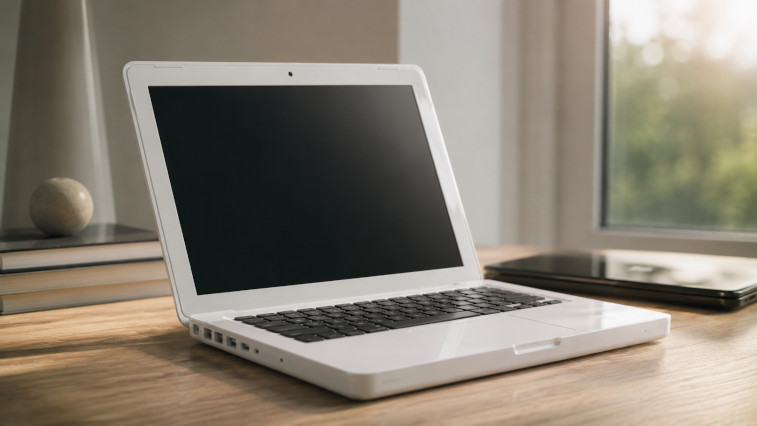
The original MacBook kept some of the friendly personality of the iBook, especially in its glossy white polycarbonate model. But it also introduced a more mature, squared-off design that felt cleaner and more modern.
The optional black MacBook became especially memorable. It was more expensive, visually distinct, and gave the consumer MacBook line a touch of understated cool.
The Display and Built-In Camera
One of the biggest visible changes was the move to a 13.3-inch widescreen display. At a time when widescreen notebooks were becoming the new standard, the MacBook felt more current and better suited for photos, movies, and multitasking.
It also included a built-in iSight camera, helping normalize video calls on laptops before they became an everyday expectation.
Intel Inside: A Major Performance Shift
Under the hood, the first MacBook used Intel Core Duo processors. Compared with the iBook and 12-inch PowerBook it replaced, the performance jump was significant.
For students, home users, and mobile professionals, this made the MacBook feel dramatically faster while still occupying Apple’s entry-level notebook category.
Everyday Features That Defined the Experience
The original MacBook included many features that now feel like markers of a different computing era: an optical drive, removable battery, FireWire, Mini-DVI, USB-A ports, and integrated graphics.
It also included MagSafe, one of Apple’s most beloved hardware ideas. The magnetic power connector made charging safer, simpler, and unmistakably Apple.
Why It Mattered
The original MacBook mattered because it clarified Apple’s laptop lineup and brought the Intel transition to the mainstream. It was not the most powerful Mac, nor the most premium, but it was the Mac notebook many people actually bought.
It became a fixture in classrooms, dorm rooms, coffee shops, offices, and homes. For many users, it was their first Mac.
Looking Back from the Apple Silicon Era
Today’s MacBooks are thinner, faster, quieter, and more efficient than anything Apple could ship in 2006. Apple silicon, Retina displays, USB-C, solid-state storage, and all-day battery life have completely changed the category.
Still, the original MacBook remains an important milestone. It was the machine that carried Apple’s consumer notebook line out of the iBook era and into the MacBook era.
Conclusion: The Future, in Plastic
Looking back, the original MacBook may seem chunky, glossy, and modest by modern standards. But in 2006, it represented the future of Apple laptops.
It gave everyday users Intel performance, a cleaner product identity, and a design that became instantly recognizable.
Twenty years later, the original MacBook still deserves its place in Apple history.
Time really does fly, and the original MacBook 20th anniversary is an important reminder.