Early Magazine Articles & Other Publications
This collection showcases some of my selected early magazine cybersecurity articles and other publications from 2015 onward.
How to Evolve and Advance in the World of Cybersecurity
21 December 2022
Cyber Security is a field with strong growth prospects and that successful professionals often combine analytical thinking with good communication and business‑sense.
Adaptability is key: you must stay alert to changing threats, understand how security interfaces with business activities, and be ready to learn continuously.
Read full article (in Greek).
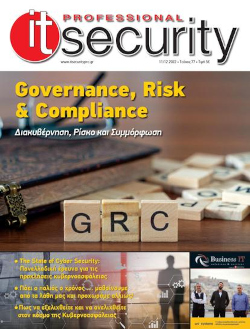
Governance, Risk & Compliance (GRC)
21 December 2022
Implementing a unified Governance Risk Compliance (GRC) framework helps organizations coordinate governance, risk‑management and compliance efforts more effectively, avoiding departmental silos, overcoming key challenges such as culture, automation, cloud‑shift.
Furthermore, critical steps for deploying a successful GRC strategy, include defining requirements, selecting technology, and continuously monitoring progress.
Read full article (in Greek).
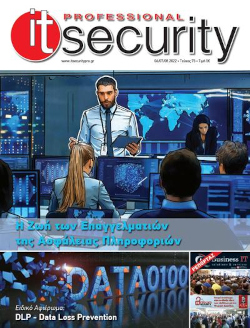
The Life of Information Security Professionals
22 July 2022
The multifaceted role of an information security professional, highlighting that beyond technical expertise they must also possess strong communication, negotiation, and project‑management skills.
Staying current is non‑optional in this field: the pace of change in threats, technologies, standards and regulations demands continuous learning and can entail long hours, high responsibility and sometimes personal sacrifice.
Read full article (in Greek).
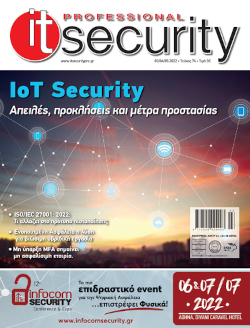
IoT Security
31 May 2022
The rapid adoption of IoT devices expands the attack surface for organizations, since many devices are designed for functionality and cost‑efficiency rather than security.
Vulnerabilities such as weak default passwords, lack of updates, and non‑segmented networks make IoT systems high‑risk, and concludes that a multi‑layered security strategy and awareness of both virtual and physical consequences are essential.
Read full article (in Greek).
How the recent revision of ISO/IEC 27002 affects ISO/IEC 27001
31 May 2022
ISO/IEC 27002:2022 has been substantially revised (reducing the number of controls, reorganizing structure) and that this update will drive corresponding changes in ISO/IEC 27001’s Annex A.
Although ISO/IEC 27001 itself had not yet been fully updated at the time of writing, organizations with an ISMS already certified should start mapping their controls to the new ISO/IEC 27002 version to stay aligned.
Read full article (in Greek).

Mobile Devices Security at the Core of Data Protection
29 March 2022
mobile devices, being increasingly used in professional settings, carry the same goals of security as desktops, but introduce unique challenges (such as loss/theft, public Wi‑Fi usage, mobile apps).
Organisations must secure all mobile endpoints accessing business systems and data, adopt measures like device management (MDM), application management (MAM), encryption, multi‑factor authentication and user training to keep devices and the data they access safe
Read full article (in Greek).
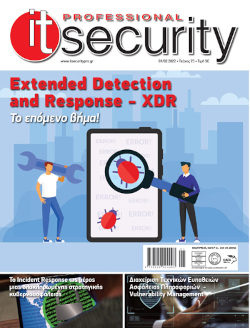
Extended Detection and Response (XDR) The Next Step
22 February 2022
Extended Detection and Response (XDR) is the evolution in cyber defense, expanding visibility and automated response beyond endpoints to include networks, cloud, identities and applications.
Moving from isolated tools to an integrated XDR platform accelerates detection, improves incident response and simplifies security operations.
Read full article (in Greek).
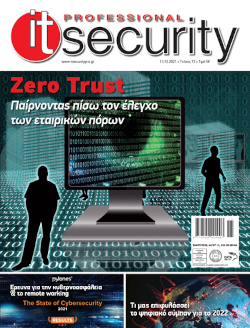
Zero Trust Regaining Control of Corporate Resources
27 December 2021
Zero Trust security model is about assuming that breaches are inevitable and thus each access request must be verified, regardless of origin. Organizations can “take back” control of their corporate assets by implementing strong identity‑verification, least‑privilege access, continuous monitoring and segmenting resources rather than trusting everything inside the network by default.
Read full article (in Greek).

Mobile Security Compatible or Conflicting Concepts
07 November 2021
The dual nature of mobile security, the convenience and ubiquity of mobile devices bring both opportunities and serious risks. While mobile devices increase productivity and connectivity, their widespread use also creates major security challenges, such as device loss/theft, unpatched vulnerabilities, insecure Wi‑Fi, and unmanaged apps, that require a balanced approach to both usability and protection.
Read full article (in Greek).
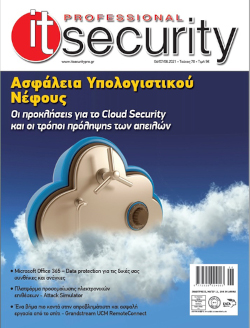
Cloud Security
13 September 2021
Moving to cloud services spreads an organization’s attack surface, as users access corporate resources from anywhere and data resides outside traditional perimeter defenses.
Key threats – misconfiguration, insecure APIs, account hijacking, lack of visibility – should drive organizations to adopt shared‑responsibility models, strong policies, employee training, and continuous monitoring to protect cloud‑based assets.
Read full article (in Greek).
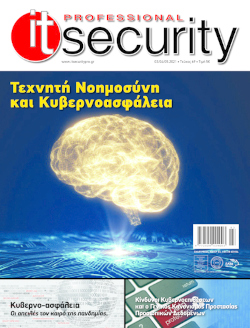
Artificial Intelligence and Cyber Security Allies or Adversaries
11 June 2021
Artificial Intelligence (AI) and machine learning are transforming Cyber Security by enabling proactive detection of threats, behavioral analysis, biometric authentication and 24/7 monitoring.
The same technologies can be exploited by cyber‑criminals to craft more sophisticated attacks, automate malicious tools and evade defenses; organizations should invest not only in AI tools but also in governance, data‑sets, skilled teams and resource allocation to manage the risks.
Read full article (in Greek).

Ransomware New Generation
25 February 2021
The evolution of ransomware into a new generation characterized by techniques like double‑extortion (stealing plus encrypting data), use of zero‑day exploits and attacks against backups and critical infrastructures.
Organizations nowadays need to treat ransomware as a business‑risk, not just an IT incident, and invest in defenses such as immutable backups, segmented networks, threat‑intelligence and proactive simulation of attack scenarios.
Read full article (in Greek).

Email Security
23 December 2020
Email remains the most widely used channel for cyber-attacks (malware distribution, phishing, ransomware) and thus organisations must adopt a multi-layered defence approach, not just spam filters.
In the era of remote work (accelerated by COVID-19), the risk has increased significantly, and businesses should combine user awareness training, strong authentication (e.g., MFA), email authentication standards (SPF, DKIM, DMARC) and technical protections (encryption, attachments/links scanning) to mitigate these threats.
Read full article (in Greek).
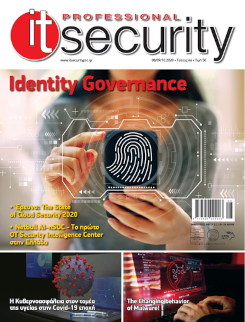
Identity Governance Trends Challenges and Benefits
22 October 2020
Identity Governance is rising in importance due to cloud-adoption, regulatory demands, and the explosion of human and non-human identities.
It’s key challenges such as legacy systems, fragmented visibility, high total cost of ownership (TCO) and manual processes in provisioning/de-provisioning are obvious.
Furthermore the benefits include operational efficiency through automation, stronger compliance posture, improved security by enforcing least-privilege and modernizing identity lifecycle management.
Read full article (in Greek).
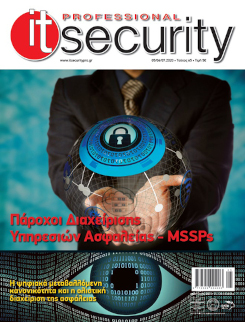
Managed Security Service Providers (MSSPs)
20 July 2020
Organisations often struggle to keep pace with the growing volume and complexity of cyber-threats, which is why outsourcing to specialised providers such as Managed Security Service Providers (MSSPs) becomes an increasingly popular strategy.
The main services MSSPs offer (24/7 monitoring, incident response, SIEM, compliance support) and also discusses how to evaluate and choose the right MSSP partner based on factors like proven processes, technological capabilities, continuous improvement and alignment with business needs.
Read full article (in Greek).

Secure Remote Work Challenges and Opportunities
03 May 2020
The rapid shift to remote work has introduced new security challenges, such as increased risks of data leakage, connectivity bottlenecks and unmanaged home-networks colliding with corporate access.
At the same time, it presents the opportunity for organizations to modernize their infrastructure, such as embracing cloud services, secure VPNs and zero-trust models, to support a distributed workforce with resilience and flexibility.
Read full article (in Greek).
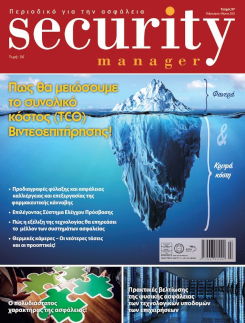
Insider Threat The ‘Enemy’ Is Us
06 March 2020
Insider threats come from people within the organization (employees, past staff, contractors or affiliates) who have legitimate access and may, either intentionally or accidentally, act in ways that harm the organization.
Organisations are increasingly recognizing these internal risks and should take a holistic response involving leadership buy‑in, dedicated teams, risk assessment, policy updates and a combination of technical and organizational controls.
Read full article (in Greek).
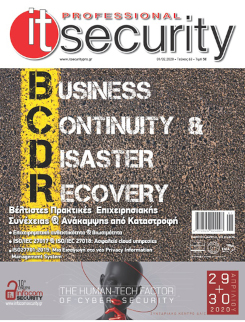
ISO/IEC 27701:2019 Introduction to the New Privacy Information Management System
27 February 2020
ISO/IEC 27701:2019 is the first international standard designed to extend the well‑known ISO/IEC 27001 ISMS framework with privacy‑specific controls, enabling organisations to establish, implement, maintain and continually improve a Privacy Information Management System (PIMS).
ISO/IEC 27701 supports compliance with modern data‑protection regulations (e.g., General Data Protection Regulation – GDPR) by providing a structured, auditable methodology for managing personally identifiable information (PII) within the context of an ISMS.
Read full article (in Greek).
BC/DR – Business Continuity & Disaster Recovery
27 February 2020
Business Continuity (BC) is a holistic management process that helps organizations maintain critical operations during disruptive events, while Disaster Recovery (DR) focuses specifically on restoring IT systems and infrastructure after a disruption.
Both are indispensable for organizational resilience and that investing in them is not a cost but a strategic necessity for survival and long‑term viability.
Read full article (in Greek).
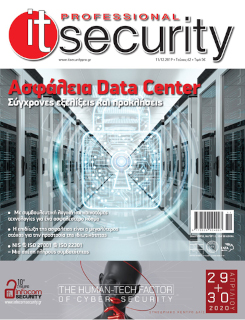
Data Center Security Modern Developments and Practices
19 December 2019
Data centers are evolving amid rising demands for reliability, energy efficiency, and heightened security, both physical and cyber‑security. Their challenges such as managing expanding infrastructures, addressing climate and energy constraints are crucial, as well as integrating standards and certifications to ensure operational resilience and trustworthiness.
Read full article (in Greek).
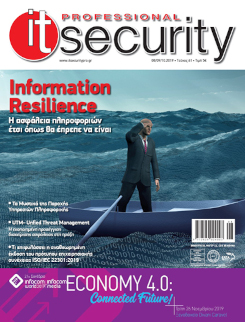
ISO 22301:2019 What the Revised Edition of the Business Continuity Standard Has in Store
30 October 2019
The 2019 revision of ISO 22301 simplifies language, removes redundant prescriptions and places stronger emphasis on performance, objectives and flexibility, making the standard more pragmatic and easier to apply.
Furthermore, while the structural format remains largely the same, organizations certified under the earlier 2012 version should plan for the transition and review their business continuity systems accordingly.
Read full article (in Greek).
Unified Threat Management
30 October 2019
UTM solutions consolidate multiple security functions, such as firewall, intrusion prevention/detection, antivirus/antimalware, VPN, content & web filtering, spam protection into a single device or platform at the network perimeter.
The benefits for organizations are simplified management, centralized visibility and cost savings, while they must be cautious about potential downsides such as performance bottlenecks or a single point of failure.
Read full article (in Greek).
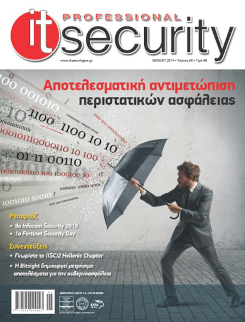
Effective Handling of Security Incidents
08 July 2019
An incident response plan is crucial for organizations to detect, evaluate and address security breaches, aiming to minimize damage, protect reputation and comply with legal obligations.
In parallel, establishing a dedicated incident‑response team (including legal, IT, PR, risk, HR) and defining clear communication and escalation procedures, as well as categorizing incident severity to tailor the response appropriately.
Read full article (in Greek).
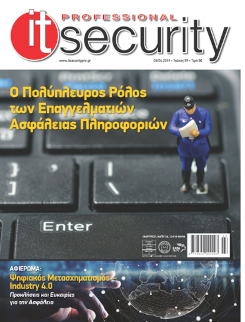
The Multifaceted Role of Information Security Professionals
22 April 2019
Professionals in information security must go beyond technical skills: they need to engage with senior management, lead training and awareness, manage governance processes, perform audits and respond to business demands.
Furthermore. the job demands continuous learning (due to evolving threats, standards and technologies) and a strong sense of responsibility; because the consequences of failure affect the whole organization.
Read full article (in Greek).

Insider Threat
04 March 2019
Insider threats stem from individuals within the organization – employees, former staff, contractors or partners—who have legitimate access to systems and data, and may either deliberately or unintentionally cause harm.
These threats are increasing in significance, with many organizations recognizing them as a major risk, and recommends a holistic response that combines leadership support, dedicated teams, risk assessment, updated policies and both technical and organizational controls.
Read full article (in Greek).

Compliance with the General Data Protection Regulation (GDPR) Strategy and Key Steps
08 May 2018
Organizations must view GDPR compliance not just as a legal requirement but as a strategic initiative. Key steps should include mapping personal data flows, assessing processing activities, implementing suitable technical and organizational measures (such as privacy‑by‑design), ensuring timely breach reporting, and embedding a culture of accountability and continuous improvement.
Read full article (in Greek).
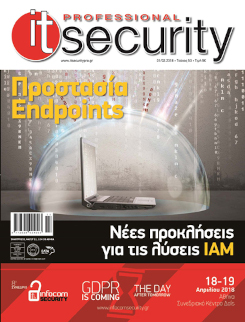
The Business Value of Identity & Access Management
19 March 2018
An identity and access management (IAM) solution is not just a security tool but a strategic asset: it automates user‑onboarding, role‑assignment and access‑control workflows, thereby reducing labor hours and administrative overhead.
IAM supports regulatory compliance (e.g., GDPR) by enforcing role‑based access, controlling privileged credentials, and generating audit trails, while also improving operational efficiency and delivering a clear return on investment through faster processes and lower risk.
Read full article (in Greek).
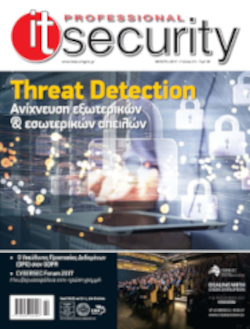
Threat Detection in the Modern Era Trends and Security Enhancement Solutions
26 October 2017
Advanced cyber threats require a multi-layered defense combining sandboxing, analytics, and cyber-intelligence. The need for faster, more accurate detection to reduce false positives and strengthen organizational resilience is crucial to detect threats and defend efficiently against them.
Read full article (in Greek).
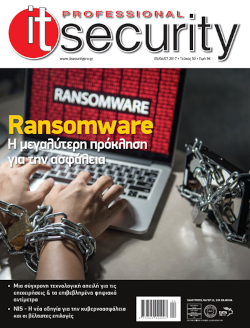
Your Files or Your Money How to Defend Effectively Against Ransomware
19 July 2017
Once files are encrypted by ransomware, recovery is rarely possible without backups; even paying a ransom doesn’t guarantee return of data.
Adopting strong preventive hygiene: user training, timely patching, limiting user access rights, and backing up data regularly are essential measures to reduce the impact of a potential attack.
Read full article (in Greek).

GDPR and Data Governance Regulatory Compliance as a Business Advantage
01 June 2017
Complying with GDPR and implementing effective data governance frameworks not only addresses legal obligations but also creates a competitive edge by enhancing customer trust and operational transparency.
Businesses which treat data governance and regulatory compliance as strategic priorities tend to outperform peers who view them purely as cost or burden.
Read full article (in Greek).
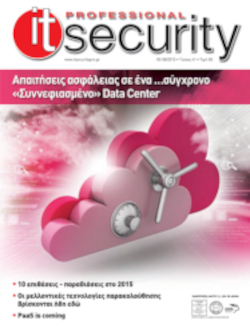
Transparency and Trust – Critical Factors for Cloud Success
01 July 2015
Successful adoption of cloud services hinges on aligning senior management and the security lead around shared goals, with transparency and trust playing a central role.
While security measures are internal, trust is outward-facing and depends on honest communication, reliable processes, and a cloud provider’s ability to meet organizational expectations.
Read full article (in Greek).

Enterprise Information Security – A Holistic Approach
01 January 2015
Information security must be approached holistically; integrating people, processes, technology, and governance rather than relying on isolated technical measures. Aligning security with business strategy and compliance to build resilience and efficiency is crucial. This unified approach helps organizations anticipate risks, reduce incidents, and strengthen overall protection.
Read full article (in Greek).
Threat Detection in the Modern Era Trends and Solutions for Strengthening Organization Security
26 October 2017
How advanced cyber threats require a multi-layered defense combining sandboxing, analytics, and cyber-intelligence. It stresses the need for faster, more accurate detection to reduce false positives and strengthen organizational resilience.
Read full article (in Greek).
Your Files or Your Money – How to Defend Effectively Against Ransomware
19 July 2017
Once your files are encrypted by ransomware, recovery is rarely possible without backups – even paying a ransom doesn’t guarantee return of data.
Adopting strong preventive hygiene is paramount: user training, timely patching, limiting user access rights, and regular data backups to reduce the impact of a potential attack.
Read full article (in Greek).
General Data Protection Regulation (GDPR) & Data Governance Regulatory Compliance as a Business Advantage
01 June 2017
Complying with GDPR and implementing effective data‑governance frameworks not only addresses legal obligations but also creates a competitive edge by enhancing customer trust and operational transparency.
Businesses which treat data governance and regulatory compliance as strategic priorities tend to outperform peers who view them purely as cost or burden.
Read full article (in Greek).
Transparency and Trust Critical Factors for Cloud Success
01 July 2015
Successful adoption of cloud services hinges on aligning senior management and the security lead around shared goals, with transparency and trust playing a central role.
While security measures are internal, trust is outward-facing and depends on honest communication, reliable processes, and a cloud provider’s ability to meet organisational expectations.
Read full article (in Greek).
Enterprise Information Security A Holistic Approach
01 January 2015
Information security must be approached holistically; integrating people, processes, technology, and governance rather than relying on isolated technical measures.
Aligning security with business strategy and compliance to build resilience and efficiency. This unified approach helps organizations anticipate risks, reduce incidents, and strengthen overall protection.
Read full article (in Greek).
Looking back on these early writings, I see how much the field of cybersecurity has changed. Each article captures a moment in time. They show both the challenges we faced and the solutions we explored.
These pieces also reflect my own growth. From mobile and cloud security to early thoughts on AI, they chart a journey of curiosity and learning.
Technology evolves fast, but some principles stay the same. Understanding complex systems. Connecting technical ideas with human needs. Sharing knowledge to help others.
These early works remind me that progress builds over time. Small insights can have lasting impact. They are a record of the past and a foundation for the future.
The journey continues and there is still much to explore.